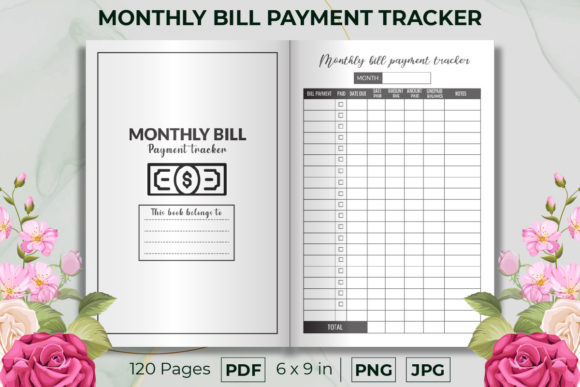
Monthly Bill Payment Tracker: Your Blueprint for Financial Control
Managing monthly finances can feel like a juggling act. Between due dates, amounts, and payment methods, it's easy to miss a detail or lose track of your cash flow. This is where a dedicated Monthly Bill Payment Tracker becomes more than just a log—it transforms into a strategic tool for financial clarity and empowerment. For creators, freelancers, and small business owners, this simple system is the foundation for turning financial admin from a chore into a streamlined, controlled process.
Beyond the Checklist: The Strategic Value of Tracking
A Monthly Bill Payment Tracker is fundamentally a structured space to record, monitor, and organize your recurring expenses. However, its utility extends far beyond a simple reminder. By providing a consistent monthly overview, it allows you to identify patterns in your spending, spot fixed costs that could be negotiated or reduced, and forecast your monthly financial commitments with accuracy. This proactive awareness is the first step toward genuine financial control, reducing stress and preventing late fees or overlooked payments.
For entrepreneurs and solopreneurs, this tracker can serve as a micro-financial model. By clearly seeing your outgoing obligations, you can better align your income goals and project timelines. It turns abstract financial pressure into concrete, manageable data.
Creative Applications and Adaptations
The basic framework of a Monthly Bill Payment Tracker is highly adaptable. Its application depends entirely on your goals and context.
- For the Digital Creator: Use it alongside project income trackers. Pair each month's bill sheet with a revenue sheet to instantly calculate your net operational profit. This clarity is invaluable for pricing services or planning growth.
- For the Household Manager: Adapt the tracker to include shared household expenses, assigning columns for who paid and who needs to contribute. This promotes transparency and simplifies shared financial responsibilities.
- For the Freelancer: Integrate client project codes or names next to relevant business expenses. This can later help in invoicing or tax preparation, linking expenses directly to client work.
- For the Budget-Conscious Individual: Add a column for "Budgeted Amount" versus "Actual Paid." This simple comparison highlights where you consistently overspend, providing clear targets for adjustment.
Designing for Effectiveness and Consistency
A successful Monthly Bill Payment Tracker is clear, consistent, and easy to use. Key columns often include Bill Name, Due Date, Amount Due, Payment Date, Payment Method (e.g., credit card, bank transfer), and Status (Paid, Pending, Upcoming). This uniformity ensures you capture all necessary information without hunting for details.
To keep the system effective, commit to a regular update ritual—perhaps every Monday morning or immediately after a payment is made. This habit prevents the tracker from becoming outdated and losing its utility. Consistency in recording is what turns the tracker into a reliable financial snapshot.
From Tracker to Financial Insight
Over time, your Monthly Bill Payment Tracker becomes a historical dataset. Reviewing several months of data can reveal valuable insights: seasonal fluctuations in certain bills, the impact of a new subscription, or the gradual increase in a utility cost. This historical view enables smarter decision-making. You might decide to switch providers, bundle services, or eliminate a recurring expense that no longer provides value.
For bloggers or educators focusing on financial literacy, this tracker can be a practical case study to share with audiences. Demonstrating how you track and adjust your own bills provides grounded, relatable advice that resonates more than abstract theory.
Integrating with Your Digital and Physical Workflow
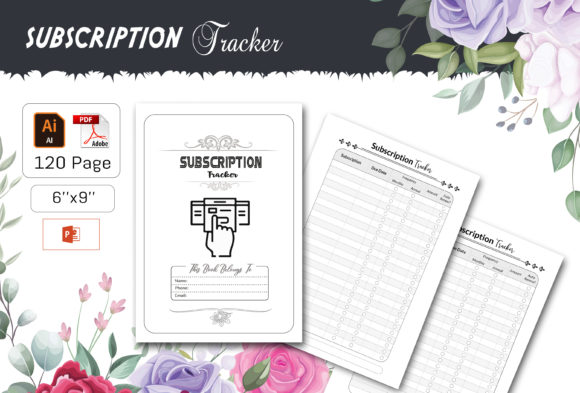
The tracker can exist in both digital and physical formats, each with advantages. A printable KDP interior book, like a 120-page, 6x9 inch design, offers a tactile, dedicated space that many find conducive to focus and ritual. It’s also always accessible, without needing to open an app or file.
Digital versions, using spreadsheets or apps, offer automation, such as alerts for due dates or running totals. Many users find a hybrid approach works best: using a beautifully designed printable sheet for the core tracking and a digital tool for complex calculations or long-term archiving. The key is to choose a format that you will actually enjoy using consistently.
For designers and publishers offering these tracker interiors, the focus should be on clean, functional layout with high-resolution source files. Providing editable PNG or JPG files allows users to customize the tracker to their specific needs, adding a personal touch that increases engagement and utility.
A Tool for Empowerment and Creative Freedom
Ultimately, a well-maintained Monthly Bill Payment Tracker reduces administrative friction. By eliminating the mental clutter of financial due dates, you free up cognitive space and time. This newfound clarity is not just about avoiding late payments; it's about creating mental bandwidth for your creative work, business strategy, or personal goals. Financial organization underpins creative freedom. Knowing your obligations are managed and visible provides a secure foundation from which to explore new projects, investments, or growth opportunities.
Whether you are a marketer analyzing business overheads, a hobbyist managing craft supply subscriptions, or a family planning for the future, this tool scales to your needs. Start with the basic columns, use it consistently, and let its structure reveal the insights that empower your next financial step. The goal is not just to track, but to understand and, ultimately, to optimize your financial flow.