Simplify Your Business with an Order Tracker Journal
Managing orders, whether for a small side business or a growing enterprise, often involves juggling a mix of digital tools and scattered notes. An Order Tracker Journal offers a simple, tactile solution: a dedicated physical notebook designed specifically to log, monitor, and follow up on every transaction. Its main purpose is to bring clarity and consistency to your sales process, transforming a chaotic flow of information into a reliable, chronological record you can trust.
The Core Value of a Centralized Tracking System
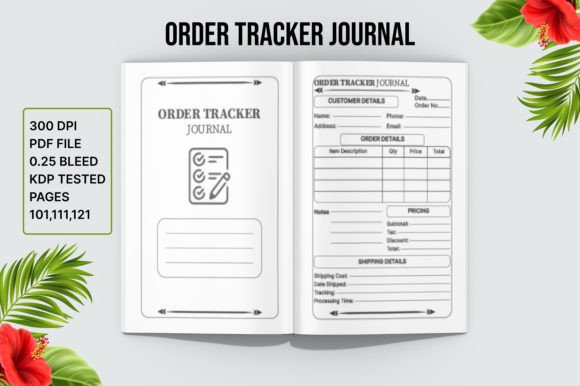
Imagine not having to search through multiple email threads, text messages, or app notifications to find an order detail. The characteristic appeal of an Order Tracker Journal lies in its centralization. It becomes the single source of truth for your commerce activities. Each page is a structured space to capture essential data like customer names, contact information, order dates, items purchased, prices, payment status, and shipping details. This practice not only prevents errors but also builds a valuable historical archive of your business interactions.
The value here is multifaceted. For the busy entrepreneur, it reduces mental clutter and administrative overhead. For the creative seller, it provides a clear snapshot of what products are moving. For the professional or freelancer managing service-based orders, it ensures nothing falls through the cracks. Its appeal is its simplicity and reliability—no software updates, no subscription fees, just a pen and a well-organized layout.
Who Benefits from an Order Tracking Journal?
You might be interested in an Order Tracker Journal if you frequently find yourself asking questions like: "Did I already invoice that client?" "When is this package supposed to arrive?" or "What was the total for last month's craft fair sales?" It directly supports the need for organization and the goal of operational efficiency. It solves the problem of fragmented record-keeping, which can lead to missed payments, duplicated efforts, and frustrated customers.
- Small Business Owners & E-commerce Sellers: Manage online store orders alongside in-person sales.
- Artists & Crafters: Track commissions, custom piece details, and client preferences.
- Freelancers & Consultants: Log project requests, deliverables, and payment milestones.
- Direct Sales Representatives: Keep a running record of customer orders and follow-up dates.
- Hobbyists Turning Passion into Profit: Establish a professional system from the very first sale.
Practical Applications in Daily Business Life
The use of an Order Tracker Journal adapts seamlessly to various contexts. In a personal and creative context, a maker might use it at a weekend market, quickly jotting down sales while also noting a customer's request for a custom color, turning a simple transaction into a future opportunity. In a professional and educational setting, a teacher selling educational materials could use it to track bulk orders from other schools, ensuring accurate invoicing.
For digital and commercial operations, even if your primary store is online, the journal serves as an excellent offline backup and planning tool. You can review weekly entries to assess which products are popular, plan your inventory restocking, and prepare for seasonal shifts. A lifestyle business, like a home-based gourmet food shop, can use it to track repeat customers and their favorite items, fostering relationship-based sales.
A Realistic Use Case: The Monthly Review
Consider a beginner-friendly example. At the end of each month, you sit down with your Order Tracker Journal. By flipping through the pages, you can quickly tally total sales, identify which payment methods are most common, and list any outstanding orders that need attention. This simple ritual, powered by your handwritten log, provides insights that might be buried in digital data. It turns raw data into actionable business intelligence.
Essential Features for a Professional Result
If you are considering creating or using a pre-designed journal, the Order Tracker Journal KDP Interiors offer a streamlined path. These are ready-to-upload files specifically formatted for Amazon's Kindle Direct Publishing (KDP) platform. They are designed so you can focus on your business, not on complex page layout software.
Important features to look for include high-quality, print-ready PDF files. The inclusion of JPG files for reference, and multiple standard sizes like 6x9, 8.5x11 inches, ensures compatibility with KDP's requirements. A page count between 101-121 pages provides ample space for a year's worth of orders without being bulky. Professional printing requires CMYK color mode and a 300 DPI resolution for sharp text and clean lines. The inclusion of a 0.25-inch bleed area is crucial; this prevents unwanted white borders after trimming, giving your published journal a polished, full-bleed finish.
What to Consider Before Choosing Your System
Before committing to a tracking method, reflect on your actual workflow. Do you need a portable size for on-the-go use, or a larger format for detailed entries? How many orders do you typically process in a month? A Order Tracker Journal is a commitment to a manual process, which can be its greatest strength—the act of writing can reinforce memory and engagement—but it requires discipline to maintain.
Also, consider scalability. As your order volume grows, you might supplement the journal with digital tools. However, for many, the journal remains the core, trustworthy anchor. The key is to start with a system that is simple to use and professionally presented, so you are proud to use it every day. The ready-made KDP interiors solve the design hurdle, providing a structure that is both functional and aesthetically clean, allowing you to launch your physical product with confidence.
Integrating Tracking into Your Creative Routine
Ultimately, an Order Tracker Journal is more than a logbook; it's a business companion. It encourages mindfulness about your sales cycle and customer relationships. By dedicating a few minutes each day to update it, you build a tangible record of your progress and growth. This practice can be surprisingly motivating, turning administrative duty into a ritual of accomplishment.
Whether you are a beginner taking your first sales or a seasoned professional streamlining operations, the clarity provided by a dedicated tracking journal is undeniable. It supports not just organization, but also peace of mind. Knowing that every order has its place, every detail is recorded, and every follow-up is scheduled, frees you to focus on the creative, service, or growth aspects of your work that truly matter.