Your Cycling Journey, Documented: The Power of a Cycling Log Book
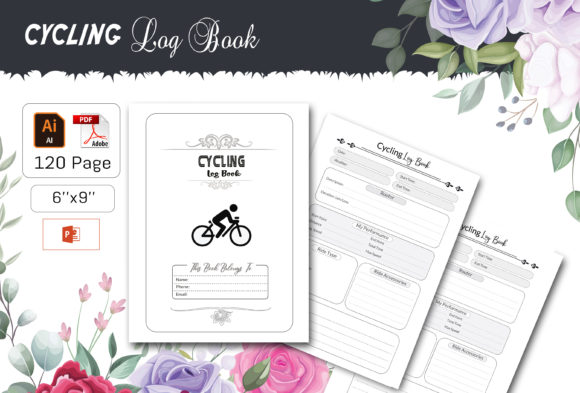
If you've ever finished a ride and wondered just how far you've come—not just on that day, but over weeks, months, or even years—you understand the core idea behind a Cycling Log Book. It's more than just a notebook; it's a dedicated companion for your cycling life. A Cycling Log Book provides a structured, yet personal, space to record your routes, distances, times, physical sensations, and those intangible moments of joy or challenge that happen only when you're on the bike.
Beyond the Stats: The Real-World Value of Logging Your Rides
At its simplest, a Cycling Log Book helps you track metrics. But its true power emerges in the real-world situations where those recorded details become invaluable.
For the Progress-Driven Rider
Imagine you're aiming to increase your average weekend ride from 20 miles to 50 miles over six months. Scribbling notes on random scraps of paper won't help you see patterns. A dedicated log allows you to systematically review: Which longer ride felt easier? Was it after a week with more sleep? Did a particular hill repeat session the prior Thursday make Saturday's climb more manageable? By correlating your performance with notes on nutrition, weather, and energy levels, you move from guessing to informed training.
For the Adventurer and Route Planner
Cycling often involves exploration. That perfect 35-mile loop with the quiet backroads and the excellent coffee stop at mile 22—you'll want to ride it again. A Cycling Log Book becomes your personal route archive. You can note not just distance and time, but surface conditions ("gravel section after bridge was loose"), landmarks ("turn left at the red barn"), and subjective highlights ("fantastic view at the summit, perfect for a photo"). This turns your log into a reproducible adventure guide for future solo rides or when sharing routes with friends.
For the Maintenance-Minded Cyclist
Your bike's performance is tied to its care. Jotting down notes after a ride—"brakes felt soft," "new clicking noise from rear derailleur"—creates a maintenance diary. When you finally take your bike to the shop or perform your own tune-up, you have a concise history. You can track how many miles you've put on a new chain or tires, helping you anticipate service needs before a problem arises on a remote ride.
Who Benefits from a Cycling Log Book? More Than Just Athletes
The utility of a Cycling Log Book spans a wide range of cyclists, each with unique goals.
The Commuter: For someone who cycles to work, the log might focus on practicalities: travel times on different routes, traffic patterns, and the correlation between departure time and arrival time. It can also track fuel savings and carbon footprint reductions, adding a layer of personal accountability and motivation.
The Recreational Family Rider: Even casual weekend rides with family can benefit from documentation. Recording routes suitable for children, noting parks or rest stops along the way, and keeping a simple list of destinations visited builds a shared family activity log, encouraging more frequent outings.
The Event Participant: Whether preparing for a charity ride, a gran fondo, or a multi-day tour, a log is your training blueprint. It helps you plan build-up phases, track recovery, and document gear choices during long preparatory rides. Post-event, it becomes a cherished record of the achievement, filled with personal anecdotes beyond the official event results.
Practical Considerations Before You Start
While the concept is straightforward, a little forethought can make your logging experience more effective and sustainable.
First, decide on your primary purpose. Is it for training, memory-keeping, or practical planning? This will determine what you prioritize recording. A training-focused log will need structured data fields for metrics. A memory-keeping journal might have more space for freeform reflections and photos.
Consider your logging frequency. Will you write after every ride, or just summarize key weekly sessions? Being realistic prevents the log from becoming a burden. Perhaps you only meticulously log your weekend long ride, while simply noting mileage for weekday commutes.
Finally, think about format. A physical notebook offers a tactile, unplugged experience, often encouraging more reflective writing. A digital spreadsheet or app might offer easier data analysis and graphing. Some cyclists use a hybrid approach: quick notes on paper later transferred to digital for trend analysis.
Observing Your Growth: The Unseen Advantage
The greatest strength of a Cycling Log Book may not be in planning the next ride, but in understanding your past ones. Over time, you'll see progress you might have otherwise missed. That hill you struggled with in April becomes a manageable incline by September. Your average speed on a familiar route creeps up without you consciously racing. You also notice patterns in motivation—what times of year you ride most, what conditions invigorate you or make you hesitant.
A potential limitation is the temptation to over-log. If recording every possible data point starts to detract from the joy of riding itself, it's time to simplify. The log should serve your cycling, not the other way around. Focus on the few pieces of information that are truly meaningful to your goals.
From Cycling to Baking: The Log Book Template Approach
The structured yet adaptable nature of a Cycling Log Book highlights a broader need: specialized logs for dedicated hobbies. Just as a cyclist benefits from a tailored record-keeping system, a passionate baker might seek a similar tool for their kitchen adventures. Imagine a Baking Recipe Log Book designed with the same practical principles.
Such a resource would offer formatted, tested pages ready to use, allowing a baker to systematically record recipes, adjustments, ingredient sources, and results. It could include features like editable files for personalization, print-ready formatting for a physical kitchen notebook, and high-quality vector graphics for adding personal touches. The core idea remains: transforming a beloved activity from a collection of ephemeral experiences into a documented, growing body of personal knowledge and achievement. Whether your passion is on two wheels or in the oven, the act of logging deepens your engagement and turns practice into progress.