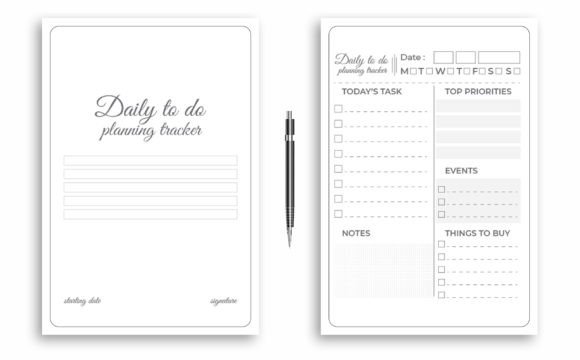
What a Daily Employee Time Log Book Can Do for Your Productivity
Whether you're a small business owner, a freelancer juggling multiple projects, or a manager overseeing a growing team, the simple act of tracking time can often feel like an afterthought. Yet, the hours spent on tasks, meetings, and client communications are the very foundation of productivity, profitability, and project clarity. This is where the practical power of a daily employee time log book comes into play. It's not just a ledger of hours; it's a foundational tool for operational insight.
The Core Purpose: From Chaos to Clarity
A daily employee time log book is a structured document designed for recording work hours, tasks, and activities on a per-day basis. Its primary function is to transform the often nebulous concept of "workday" into tangible, reviewable data. While many think of time tracking solely for payroll, its utility stretches far beyond that. It serves as a personal audit tool for employees, a project management asset for teams, and a legal safeguard for businesses needing to document labor for contracts or compliance.
The real magic happens when this log moves from a theoretical idea to a practiced habit. Imagine ending a hectic week and being able to review exactly where time was allocated, instead of relying on a foggy memory. For the solo entrepreneur, it can pinpoint which client projects are consuming disproportionate resources. For a team, it can reveal collaboration patterns and identify processes that are causing bottlenecks.
Who Actually Uses These Logs? A Look Across Industries
The application of a daily employee time log book is remarkably versatile.
Freelancers and Consultants: For independent professionals, time is literally money. A detailed log provides incontrovertible data for client invoicing, especially for hourly work. It also helps in self-assessment: is the time spent on a particular type of service yielding a good return? It can be the key to deciding which projects to pursue or which rates to adjust.
Small Business Owners and Managers: Owners wear many hats. Using a log, even for themselves, can help balance operational tasks with strategic growth work. For managers, distributing logs among a team provides visibility into workload distribution without intrusive micromanagement. It can be crucial for justifying new hires or reallocating staff when data shows consistent overtime or task overload in certain areas.
Remote and Distributed Teams: In environments where physical oversight isn't possible, a shared commitment to time logging fosters transparency and accountability. It helps remote team members self-regulate and provides managers with a neutral record of engagement and effort, which is vital for fair performance reviews and equitable workload planning.
Creative Agencies and Project-Based Firms: In fields like marketing, design, or software development, projects are often scoped with estimated hours. A daily log book becomes the empirical evidence against those estimates. It allows for precise analysis of project variance—why did that website take 40 more hours than planned? This historical data is invaluable for quoting future projects more accurately.
Service Industries: Lawyers, therapists, private tutors, or repair services who bill by the hour require accurate, defensible time records. A well-maintained log is both a billing tool and a professional record that can protect against disputes.
Turning Data into Action: Practical Use Cases
Let's move beyond who uses it to how it actively changes workflows.
Consider a common scenario: project creep. A task was supposed to take three hours but ends up taking six. Without a log, this might just be a frustrating anecdote. With a daily employee time log book entry, it becomes a data point. You can now ask specific questions: Was the delay due to unclear initial instructions? Did it require unexpected research? Was there an interruption cascade? The log provides the anchor for a productive post-mortem.
Another situation is multi-tasking inefficiency. Many professionals pride themselves on handling several things at once. A time log often reveals the hidden cost of context-switching. By logging tasks in blocks, you might visually see that a day fractured into ten small tasks was less productive than a day focused on two deep work blocks, even if the total hours are the same.
For teams, a unified log system can highlight collaboration gaps. If a project is lagging, reviewing synchronized logs might show that Employee A completed their piece on Tuesday, but Employee B didn't see it until Thursday because there was no clear handoff marker. The log itself can incorporate fields for "task status" or "next action," prompting smoother workflows.
Before You Implement: Key Considerations
Introducing a daily employee time log book requires some forethought to ensure it's helpful, not burdensome.
First, consider culture and perception. In some teams, time tracking can be perceived as surveillance. It's critical to communicate the purpose clearly: it's for project health, fair workload distribution, and accurate client billing, not for penalizing every 15-minute break. Frame it as a tool for empowerment and insight.
Second, decide on detail level. Should entries be granular (e.g., "9:00-9:30 - Email client X; 9:30-10:45 - Draft proposal Y") or broader (e.g., "Morning - Client Communications; Late Morning - Project Development")? Granularity offers more data but requires more discipline. Start with a manageable level to avoid resentment.
Third, choose the right format. This is where ready-to-use tools, like professionally designed KDP interiors, become valuable. A pre-formatted daily employee time log book saves significant setup time. Look for features that match your needs: weekly summaries, project code columns, notes sections, and a clean layout that makes daily entry a quick task. The availability of editable files (like PowerPoint or Illustrator) means you can adapt the template to include your company's specific categories or branding before printing or digital distribution.
Strengths and Potential Limitations
The strength of a physical or digital PDF daily employee time log book lies in its simplicity and focus. Unlike complex software that can be overwhelming, a dedicated log book has a single, clear purpose. It reduces digital distraction—you're not switching into a multi-feature app where you might get sidetracked. For many, the act of writing can reinforce memory and commitment. Furthermore, having a historical, bound record (if printed) provides a tangible archive of work that can be easily referenced months later.
Potential limitations are mainly around scale and automation. For very large teams, collecting and analyzing physical logs manually can become administrative overhead. In such cases, the log book might serve better as a personal tool for individuals, with managers using aggregated data from digital systems. Also, a static log book won't automatically create reports or graphs; analysis requires manual review. This, however, can be an advantage for small teams, as the review process itself can be a thoughtful, engaged activity.
Ultimately, adopting a daily employee time log book is about building a culture of awareness. It shifts the focus from just "being busy" to understanding *how* time is spent. The insights gained—whether for solo productivity, team efficiency, or client transparency—are universally valuable. For those ready to implement, leveraging a professionally designed, ready-to-upload template ensures you start with a tool that is functional, clear, and easy to maintain, letting you focus on the work itself while the log book quietly captures the story of your progress.