Garden Planner and Log Book: Your Digital Toolkit for a Thriving Garden
Whether you're nurturing a single windowsill herb pot or orchestrating the symphony of a sprawling backyard vegetable patch, the journey from seed to harvest is a story of observations, adjustments, and sometimes, hopeful guesses. A Garden Planner and Log Book transforms that story into a strategic, documented, and deeply rewarding narrative. It’s more than a notebook; it's a central hub for your gardening intelligence, capturing everything from initial sketches to final yields.
Why a Structured Planner Beats Scattered Notes
Imagine trying to remember, three seasons later, which tomato variety outperformed in the rainy summer of 2021, or exactly when you planted those carrots that grew so perfectly. Scraps of paper, digital photos without context, and memory alone are fragile systems. A dedicated planner consolidates this chaos. For the passionate home gardener, this means building a personal encyclopedia of your own micro-climate and soil, year after year. You stop repeating mistakes and start replicating successes.
Consider the real-world scramble of spring. You’re bombarded with seed catalog inspiration, but without a plan, you might overbuy, forget companion planting principles, or misjudge spacing. A planner’s layout section forces a moment of pause—a visual map of your garden space that considers sunlight paths, existing perennials, and rotation schedules. This simple act of plotting can prevent the midsummer overcrowding that stifles plants.
Scenarios Where a Garden Log Book Becomes Essential
The utility of a Garden Planner and Log Book stretches far beyond the typical backyard. Community garden coordinators, for instance, use them to manage shared plots, track individual member’s plantings, and schedule communal watering or composting duties. It becomes an administrative and educational tool for the whole group.
For educators running school garden projects, a log book is a cross-curricular goldmine. Students can record scientific observations about plant growth, sketch botanical illustrations, log weather data, and calculate harvest yields. It turns a physical garden into a living lab notebook, with the planner providing the structured framework for their learning.
Even for the therapeutic gardener, someone cultivating for mental well-being rather than massive production, the log book serves a different purpose. It becomes a journal of progress and peace. Recording the first sprout, the color of a bloom, or the quiet time spent tending can deepen the mindful connection to the activity, making the process as valuable as the produce.
From Personal Use to Professional Publishing
This deep need for a structured gardening tool has sparked a vibrant niche in the printable and publish-on-demand market. If you’ve ever thought, “I could design a better layout for my needs,” or spotted a community need for a specialized garden journal, then creating your own version is a logical next step. This is where fully editable, customizable InDesign templates for a Garden Planner and Log Book enter the scene.
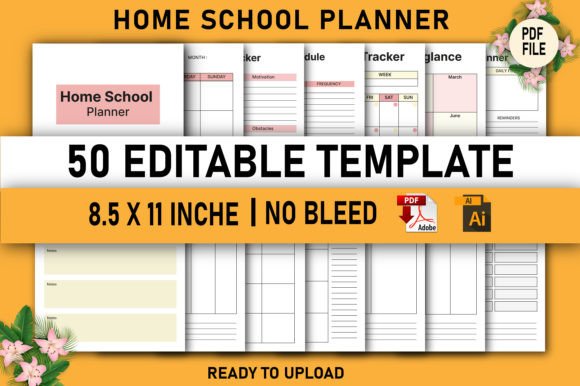
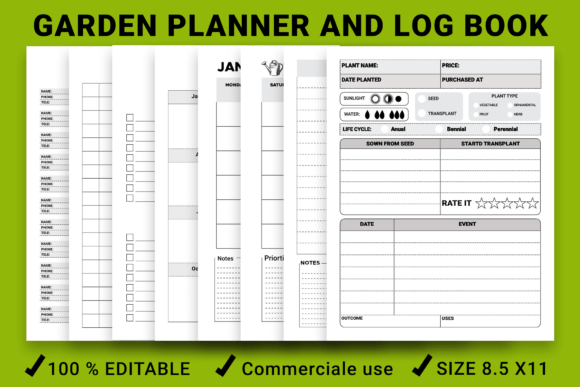
These templates are not just simple PDFs. They are professional-grade design files, typically offered as InDesign files alongside print-ready PDFs, made for the popular 8.5 x 11 inch size. They are 100% editable, meaning you can tailor every element. You can change the section titles from “Vegetable Patch” to “Medicinal Herb Garden,” adjust the log pages to focus on pollination notes for a bee-friendly garden, or add pages for soil test results. The commercial use license means the finished product you create is yours to sell.
Who Benefits from These Customizable Templates?
The audience is diverse. A gardening blogger with a dedicated following might create a branded planner as a premium offering for their readers. A small homesteading business could design a specialized “Market Garden Profit Planner” that includes cost tracking and sales logs, selling it to other small-scale growers. Creative entrepreneurs in the low or no-content KDP (Amazon Kindle Direct Publishing) space use these templates as the foundation for a ready-to-print product, bypassing the complex design work to focus on marketing and sales.
Consider the practical considerations before diving in. Having access to Adobe InDesign is crucial for using the .INDD files effectively. If you’re only familiar with simpler software, the provided PDF version might be your starting point, though customization will be more limited. Also, think about your target audience’s specific pain points. Does a balcony gardener need the same extensive crop rotation charts as a farmer? Probably not. Customization allows you to solve a very specific problem for a defined group of gardeners.
The Strengths and Practicalities of a Ready-to-Use System
Using a pre-designed template system offers immense strengths. It eliminates the hundreds of hours of designing page layouts, creating consistent tables, and ensuring print margins are correct. The “No Bleed” pages specification, for instance, is a technical print requirement that many newcomers overlook; a professional template handles this correctly from the start. You get a product that is immediately ready for printing, whether you’re selling digital downloads or using a print-on-demand service like Amazon KDP.
The potential limitation lies in the generic starting point. A template is a skeleton. Its value is unlocked by how well you flesh it out for your niche. A template might include a standard pest tracking page, but if you’re creating a planner for arid-region gardeners, you might need to emphasize water logging and drought-tolerant plant lists instead. The customization is your responsibility and opportunity.
Bringing It All to Life: A Practical Example
Let’s follow a hypothetical user, Maria. She runs a small online business selling heirloom seeds. She purchases a Garden Planner and Log Book InDesign template. She modifies the cover and branding to match her seed company. Inside, she enhances the “Variety Performance” log pages, adding columns specifically for notes on germination rates and flavor profiles—key data for her customers. She removes the extensive orchard section, as her clientele are mostly urban gardeners. She then sells this tailored planner as a digital product alongside her seeds, providing her customers with a perfect tool to track the performance of the very seeds she sells. It becomes a value-added product that deepens customer loyalty and provides incredibly useful feedback data for her own business.
This example shows the transition from a generic tool to a targeted solution. The editable template is the bridge that allows gardeners, creators, and entrepreneurs to move from using a planner to sharing their own optimized version of it with a community that needs it.
The final observation is that gardening, at every scale, is an exercise in learning and adaptation. A Garden Planner and Log Book, whether you are using one or creating one to sell, formalizes that learning. It turns experience into data, hope into strategy, and a hobby into a documented legacy of growth. For the adult seeking practical solutions in their gardening journey or their creative business, it represents a tool that grows in value with every season it’s used.